Mensagens

A mostrar mensagens com a etiqueta Ingmar Bergman

A morte iminente

Imagem
[Spoilers] Wild Strawberries (1957) compreende uma das sequências mais belas da história do cinema. De acordo com Ingmar Bergman, este inspirou-se um pouco noutra obra de seu nome  The Phantom Carriage (1921) , curiosamente realizada por Victor Sjöström, o protagonista do filme aqui destacado. A cena referida destaca um dos sonhos tidos pelo protagonista naquilo que pensa ser o período terminal da sua vida. E este sonho reflecte muitos dos seu medos e funciona como um meio de antecipação da morte iminente que o parece chamar.  Sente-se perdido numa existência com muitas vias possíveis a tomar. O tempo é agora escasso e acaba por se tornar uma nulidade, tal como se observa no relógio sem ponteiros, o mesmo que me traz o senhor Dalí à memória.  Uma sequência com uma mise-en-scène e fotografia brilhantes. 
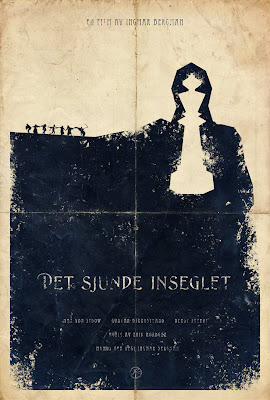
A arte dos posters (XX)

Imagem
O Sétimo Selo (1957), Ingmar Bergman

Miscelânea (IV)

Imagem
Sister Alma: If she won't speak or move because she decides not to, which it must be if she isn't ill, then it shows that she is mentally very strong. I might not be equal to it.   (Persona, 1966, Ingmar Bergman)   Selma: You like the movies, don't you?  Bill Houston: I love the movies. I just love the musicals.  Selma: But isn't it annoying when they do the last song in the films?  Bill Houston: Why?  Selma: Because you just know when it goes really big... and the camera goes like out of the roof... and you just know it's going to end. I hate that. I would leave just after the next to last song... and the film would just go on forever. (Dancer in the Dark, 2000, Lars Von Trier) George: It takes time in the morning for me to become George, time to adjust to what is expected of George and how he is to behave. By the time I have dressed and put the final layer of polish on the now slightly stiff but quite perfect George I know fully what part I'...